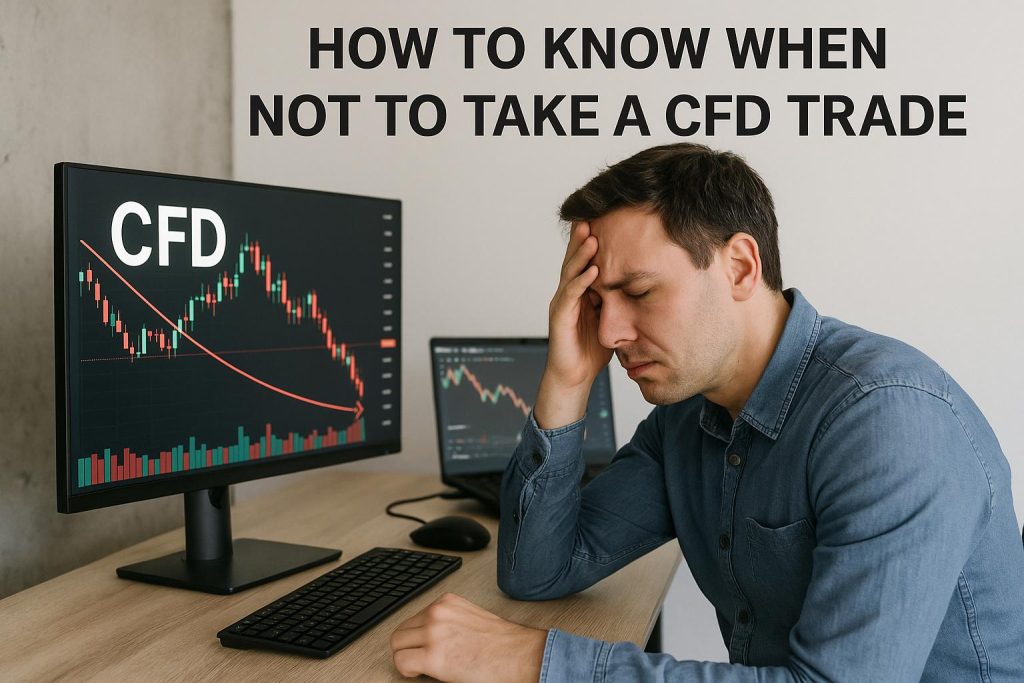
Contracts for Difference, commonly known as CFDs, have gained considerable attention in the world of financial trading. As financial derivatives, CFDs offer traders the unique capability to speculate on the price movements of a broad spectrum of asset classes, ranging from stocks to commodities and beyond. While the allure of substantial profits is undeniable, the risks inherent in CFD trading can be equally formidable. A nuanced understanding of the circumstances under which refraining from entering a CFD trade is judicious can significantly contribute to effective risk management.
One of the bedrock principles of responsible trading is an astute evaluation of prevailing market conditions. Different markets exhibit varying degrees of volatility influenced by factors such as economic indicators, central bank policy shifts, and geopolitical developments. Markets characterized by high volatility may present numerous trading opportunities, tempting traders with the prospect of profit. However, this same volatility can swiftly translate into increased risk exposure. An unpredictable market response to economic news or geopolitical tensions necessitates caution. Traders must exercise discretion, often choosing to steer clear of CFD trading until market stability is more apparent.
Another cornerstone of prudent trading involves thorough introspection of one’s financial background before engaging in CFD trading activities. The temptation to enter trades without a comprehensive understanding of your financial resources and risk tolerance can lead to undesirable financial pressure. It is imperative for traders to establish a well-defined trading plan, encompassing an evaluation of risk appetite and appropriate capital allocation. Adhering to this plan ensures that trading decisions align with personal financial goals, reducing the likelihood of engaging in trades that may exceed your financial capacity or risk threshold.
An effective risk management framework is indispensable in the realm of CFD trading. Avoiding trades when risks cannot be effectively controlled is a prudent approach. This consideration includes the strategic placement of stop losses, which is vital in ensuring an acceptable risk-to-reward ratio that aligns with your strategy. High leverage, often portrayed as appealing due to the potential for amplified returns, simultaneously exponentially increases exposure to loss. A thoughtful balance between leverage and risk tolerance must be maintained to mitigate potential adverse outcomes.
Discipline is an underappreciated yet critical element of successful trading. Traders must consistently adhere to a pre-defined trading strategy, one that has been thoroughly tested and adjusted to suit their financial goals. The temptation to enter trades on impulse or to act upon unsubstantiated market tips can disrupt trading consistency and elevate the incidence of losses. By rigorously following a structured strategy, traders cultivate a disciplined approach that minimizes emotional decision-making and emphasizes calculated, informed actions.
The influence of personal emotional and psychological states on trading performance is profound. Traders must recognize their emotional baseline and exercise caution when experiencing heightened stress, fatigue, or emotional turmoil. Trading decisions made under such conditions are more likely to be impulsive and irrational, jeopardizing the effectiveness of market analysis. Ensuring a clear and focused mindset is paramount to achieving steady, rational decision-making that aligns with strategic trading objectives.
Technological reliability is an often overlooked but crucial component of a trader’s toolkit. The potential impact of technical issues such as platform outages, connectivity problems, or sluggish execution speeds can undermine trading efficiency. Traders should remain vigilant with regard to the robustness of their trading platforms, ensuring that software and hardware components are fully operational and secure. Any technical malfunctions should prompt a temporary halt in trading activities until optimal conditions are restored. The development of a robust contingency plan for technological failures can further safeguard against potential trading disruptions.
An acute awareness of when to abstain from CFD trading is as integral as identifying opportunities to initiate trades. The multifaceted process of evaluating market conditions, scrutinizing one’s financial standing, and introspecting personal emotional readiness, alongside steadfast adherence to a trading strategy, forms the bedrock of effective risk management in CFD trading. Traders who engage with discipline and foresight are better positioned to navigate the challenges inherent in the market and to safeguard against potential adverse outcomes. To further enhance one’s understanding of CFD trading and its intricacies, engaging with credible resources from reputable brokers and financial educators comes highly recommended.