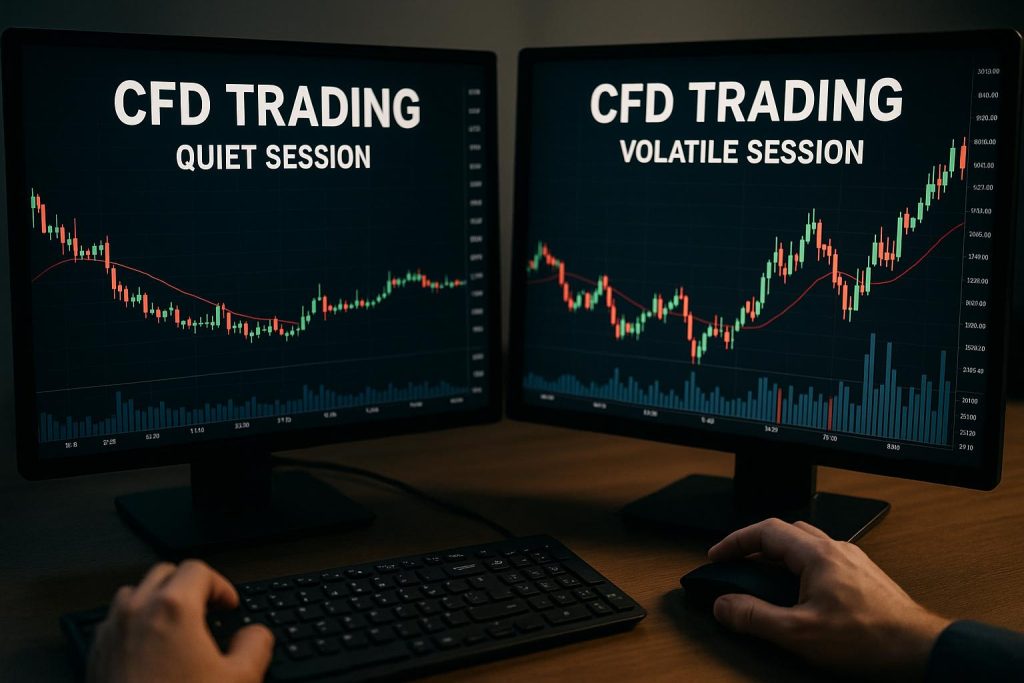
Contract for Difference (CFD) trading has emerged as a popular financial instrument, offering investors the chance to speculate on the price movements of various assets without the need to own these underlying assets. This feature makes CFD trading not only convenient but also a versatile tool for engaging in multiple markets, such as stocks, commodities, indices, and currencies. However, the attractiveness of CFD trading is significantly enhanced by the leverage it offers, which can amplify gains while also increasing potential risks. To have a comprehensive understanding of CFD trading, it is crucial to delve deeper into the dynamics of different market sessions and their implications on trading strategies.
At its core, a contract for difference is a financial contract that pays the differences in the settlement price between the open and closing trades. This implies that traders never actually own the asset they are trading, be it a share, commodity, or currency. Instead, they agree to exchange the difference in value of this asset from the time the contract opens until it closes. This mechanism provides traders with the opportunity to profit from both rising and falling markets.
CFD trading is commonly utilized for its flexibility and is increasingly popular among traders looking to diversify their portfolios without committing large amounts of capital upfront. Since CFDs are leveraged products, traders can open larger positions than what their initial capital might otherwise allow. This attribute can significantly enhance profit potential, but it also increases the possible risks of loss, necessitating careful risk management and strategic planning.
Quiet sessions, characterized by low volatility and fewer movements in asset prices, are periods where markets experience limited activity. These sessions frequently occur during times when there is a scarcity of significant economic announcements, geopolitical events, or other catalysts that might influence market movements. As a result, CFD trading during these sessions tends to be more subdued.
For traders who prefer steady and methodical trading approaches, quiet sessions can provide an environment where technical analysis becomes more reliable. With fewer abrupt shifts in price, technical patterns such as support and resistance levels can be more easily identified. This stability permits traders to employ range-bound strategies, focusing on small, systematic price movements within pre-defined boundaries.
While the financial markets during quiet sessions may exhibit predictability, it’s also important to understand that the potential for significant profit is generally reduced. The narrower price ranges mean that returns are limited unless traders employ high leverage, which in itself brings about a higher degree of risk. Therefore, traders must carefully manage their leverage and adhere to stringent risk management practices to protect against unforeseen market reversals.
Contrasting with quiet sessions are volatile sessions, known for large price swings and heightened market activity. Volatile conditions can be instigated by a variety of factors including major economic data releases, geopolitical developments, or substantial financial events that pertain to either regional or global markets. These events can catalyze increased trading interest and activity, thereby resulting in significant price movements.
For experienced CFD traders, volatile sessions present opportunities for substantial short-term gains. Traders who thrive in high-pressure environments often gravitate towards these sessions because they offer potential for rapid and considerable returns. However, with increased potential rewards comes an elevated degree of risk. Volatile markets are notorious for slippage—a situation where the expected price of a trade differs from the actual price due to market movement, leading to unwelcome financial surprises. Furthermore, trading in such conditions is often accompanied by wider spreads, which can increase transaction costs.
In both quiet and volatile market sessions, the importance of effective risk management in CFD trading cannot be overstated. Employing risk management techniques is critical to safeguard trading operations from unexpected adverse price movements.
One of the most fundamental tools at a trader’s disposal is the use of stop-loss orders. This feature allows traders to set predefined levels of acceptable loss for a given position, automatically closing the trade if the asset price reaches this limit. By doing so, traders protect themselves from disastrous losses, which can be especially pronounced in a leveraged trading environment.
During quiet sessions, it may be prudent to moderate position sizes as a means of aligning with the restricted price activity, ensuring flexibility if market conditions suddenly become unfavorable. Conversely, in volatile sessions, larger price swings necessitate setting tighter stop-loss orders and possibly adopting smaller position sizes to limit potential downsides.
Moreover, maintaining a disciplined approach entails setting appropriate leverage levels compatible with personal risk tolerance and the specific characteristics of the trading session. Failure to implement these risk management strategies effectively can result in significant financial pressures, undermining the trader’s ability for sustained engagement in trading activities.
Each investor must tailor their trading strategy to reflect personal risk preferences and desired outcomes, thereby determining the appropriateness of quiet versus volatile sessions. For traders with a penchant for consistency and minimal risk exposure, quiet sessions may complement their trading style, offering them a controlled environment to execute their tech-based strategies. Meanwhile, those enticed by high-impact, fast-paced opportunities may orient their efforts towards volatile sessions.
A sophisticated understanding of the specific attributes related to each session type can significantly enhance a trader’s strategic execution. Aligning session characteristics with individual trading plans not only improves the likelihood of successful trades but also solidifies a trader’s aptitude to navigate and thrive in the oscillating landscape of CFD trading.
For traders seeking comprehensive studies and strategic insights about CFD trading practices, exploring financial education platforms or resources such as Investopedia can provide added depth and learning materials to aid in refining their trading skills.