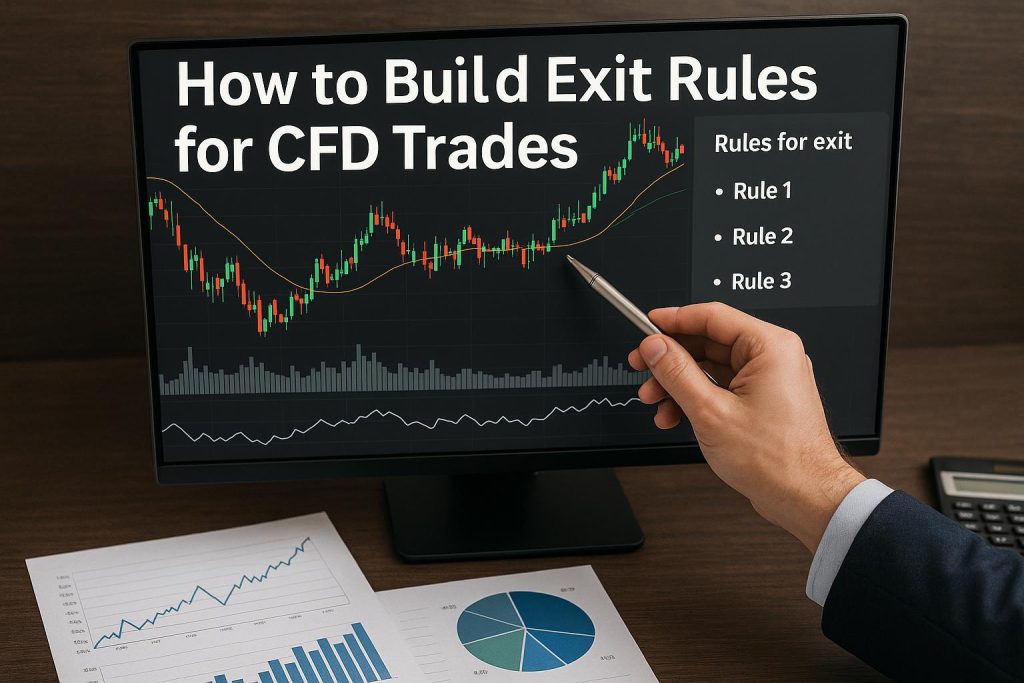
When engaging in the trading of Contracts for Difference (CFDs), one of the pivotal components that a trader must develop is the ability to establish effective exit rules. The primary purpose of these rules is to provide guidance on when to close a trading position to either safeguard the capital invested or to secure profits made. While entry rules dictate the optimal time to initiate a trade, exit rules are fundamental in determining the appropriate time to discontinue a position.
CFD trading can present a complex landscape filled with numerous opportunities and risks. As such, understanding the various exit strategies and their implementation is crucial for any trader aiming to succeed in this environment. The following sections delve into various exit strategies, complete with the tools and techniques that can be used to implement them effectively.
Exit strategies constitute a critical component of any CFD trading plan. These strategies provide a structured framework that aids in making informed decisions, eliminating impulsive, emotion-driven choices. The essence of an exit strategy is to make calculated decisions about when to withdraw from a position. It is essential that these strategies align with the trader’s overarching objectives, risk appetites, and the specific market conditions they are dealing with.
When formulating exit strategies, one must consider their personal trading goals. If capital preservation is the priority, the trader’s strategies will differ significantly from those of someone focused on maximizing short-term gains. The inclusion of risk management principles is paramount in crafting effective exit strategies. These principles serve to protect the trader’s account by prescribing the limits of acceptable risk.
Stop-loss orders are an intrinsic element of any robust exit strategy. By setting a pre-determined level of acceptable loss, traders can use stop-loss orders to exit unsuccessful trades before losses mount uncontrollably. This form of order is an indispensable tool for risk management, designed to protect the trader’s capital by capping potential losses to a manageable level.
A stop-loss order is essentially an automatic trigger to close a position when a specified price boundary is reached. This functionality helps traders maintain discipline, as it prevents the emotional attachment that can arise during a losing trade. Instead of ruminating on potential future earnings, the trader adheres to a pre-planned level of acceptable risk.
When establishing a stop-loss, a trader must take into account several factors including the volatility of the market and the unique characteristics of the invested asset. Some traders may opt for a percentage-based stop-loss, while others might prefer a specific monetary amount per trade. Striking a balance is essential; the stop-loss ought to be set at a point that allows for normal market fluctuations, thereby protecting the position from premature closure due to short-term volatility while maintaining adequate protection.
Different assets behave differently under varied market conditions; hence, understanding the specific environment in which the asset operates before setting a stop-loss is essential. An asset with higher volatility, for instance, may require a wider stop-loss margin compared to a more stable asset to account for expected price swings.
Equally significant in an exit strategy are take-profit orders. These are designed to establish a price point at which the trader anticipates closing a profitable position. By clearly defining these points in advance, traders can lock in gains before market corrections or reversals erode them.
Take-profit orders enable traders to capitalize on favorable market moves and provide certainty in terms of expected return objectives. Each trader needs to accurately determine their take-profit levels based on a comprehensive analysis of market performance and forecasts.
Determining appropriate take-profit levels involves methods such as technical analysis, including examining resistance levels or utilizing Fibonacci retracements. It is prudent to set realistic and achievable profit targets that reflect both historical market performance and present-day conditions. Unrealistic profit levels might encourage behaviors influenced by greed rather than strategic planning.
Traders must keep in mind that take-profit levels may need frequent adjustments to reflect changing market conditions. As such, periodic reassessment of these levels can be key in maximizing profitability while remaining aligned with market trends.
Trailing stops present a more dynamic alternative for managing exit strategies. These are adjustable stop levels that shift alongside favorable market price movements. The flexibility offered by trailing stops means that traders can lock in earned profits while also allowing active positions to expand as long as they remain profitable.
A common practice when setting trailing stops is to define them using a fixed percentage or number of points relative to the current market price. This method allows for automatic recalibration of exit points in line with beneficial price trends, without necessitating constant manual oversight.
Ultimately, trailing stops serve as an excellent tool for securing gains during times of market advancement, mitigating risks, and optimizing the performance of a trading strategy.
The art of establishing effective exit rules for CFD trading is anchored in a profound appreciation for both risk management and the intricacies of market dynamics. Through structured exit strategies, encompassing elements such as stop-loss orders, take-profit levels, and trailing stops, traders can manage their positions with greater efficacy and enhance their success probabilities.
Nevertheless, regular evaluation and alteration of exit rules are fundamental as markets and personal trading objectives evolve. Adapting to market changes not only preserves trader agility but also contributes to sustained success in trading pursuits. For further enrichment in trading strategies, traders are encouraged to delve into educational resources offered by comprehensive platforms and portals dedicated to financial education.